Landscape art should do more than fill blank walls; it can extend your brand’s story into physical space and influence how people feel at work. This guide explains how to match landscape paintings and prints to your brand voice so lobbies, meeting rooms, and hospitality areas feel deliberately curated rather than accidental. It offers practical methods to create a vendor-ready brief, choose subjects that shape emotion, and identify the right pieces, including giclée and vintage prints, canvas reproductions, and original landscape paintings, before your next installation.
Key takeaways
- One-page brief: Capture the mood in three words, name two dominant brand colors, and list approved subjects. That short brief keeps vendor selections aligned with your visual identity.
- Pick the medium: Use museum-quality giclée or gallery-wrapped canvas reproductions for consistent color and durability. Commission an original when you need a unique focal piece with documented provenance.
- Scale and sightlines: Aim for artwork that covers about 60 to 75 percent of seating width, photograph and measure walls before ordering, and confirm that details read clearly from typical viewing distances. Mockups with painter’s tape help verify scale on site.
- Budget bands: Set clear price ranges and procurement rules before you start. Include framing, shipping, and installation in total cost estimates to avoid surprises.
- End-to-end packages: Work with vendors who offer site surveys, scaled mockups, and sample walls. Those services reduce risk and speed rollouts across multiple locations.
Match landscape art to your brand and workplace culture
Start by turning brand attributes into clear visual instructions. Create a single-page creative brief vendors can use and ask stakeholders for three mood words, two dominant brand colors, and a short list of allowed subjects such as coast, forest, or abstract. A concise brief keeps selections coherent across floors and helps every installation read as part of the same visual story.
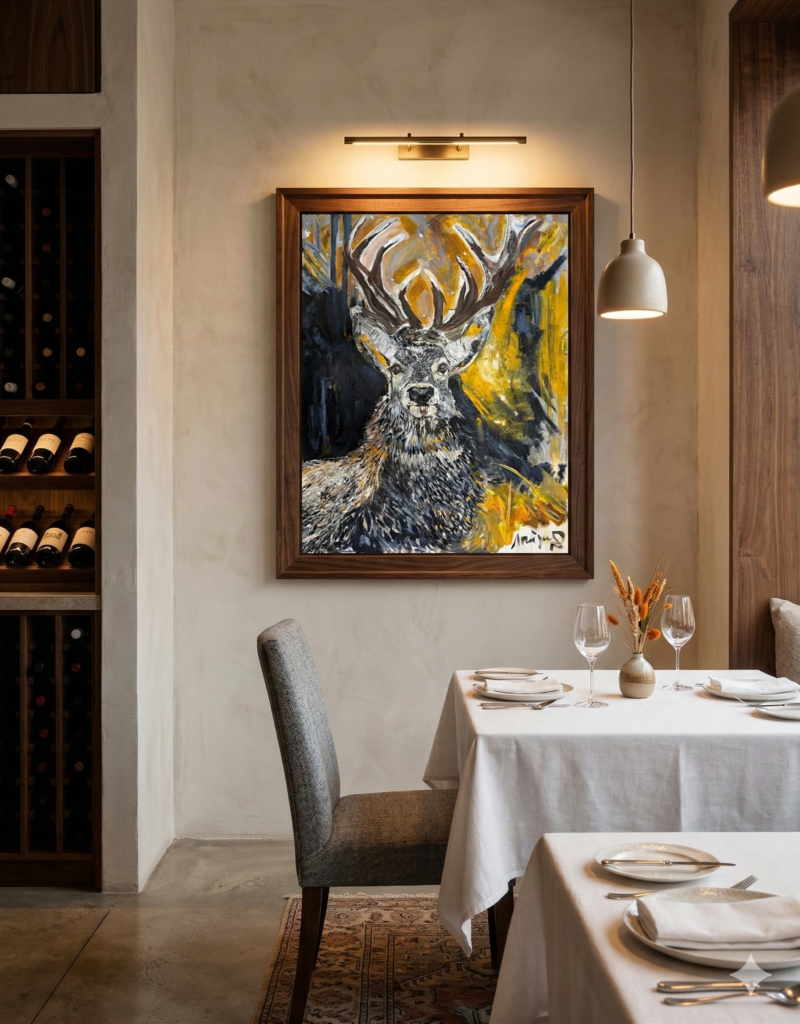
Match imagery to each room’s function so art supports behavior and mood. Seascapes calm waiting and hospitality zones, mountains work well in lobbies and meeting rooms, pastoral scenes make staff areas feel approachable, and abstract landscapes invite conversation in creative hubs. Think of subject selection as programming: scenic pieces soothe, while bolder, more abstract treatments encourage engagement.
Prioritize accessibility and cultural fit when you select or commission work. Vet imagery against a short checklist that asks whether a piece could alienate staff or visitors, whether it respects local context and cultural sensitivities, and whether the composition is readable from typical viewing distances. Apply color-blind friendly rules such as high contrast and distinct textures, and use subtle branding overlays only where they support cohesion without overpowering the artwork.
Use the brief to shortlist vendors and options efficiently so decisions stay consistent across sites. Sizing and placement are the practical next steps that determine how a piece will perform in real spaces.
Choose prints, canvas reproductions, or originals
Decide whether reproductions or originals suit your goals and budget before you buy. Museum-quality giclée landscape prints reproduce color and detail with high fidelity and longevity. They use archival pigment inks on fine art papers such as Hahnemühle Photo Rag or Somerset Velvet to preserve color for decades, and pigment-based inks closely match the original palette at a fraction of the cost of an original. Vendors such as Mpix and FinerWorks provide giclée services with framing options that simplify corporate specifications.
Canvas reproductions and gallery-wrapped prints deliver tactile texture that reads well from a distance and removes glass reflections. Canvas typically costs less than originals, and laminate or UV coatings add protection in high-traffic zones. For contemporary interiors, frameless gallery-wrap presentations often read more like originals than framed paper.
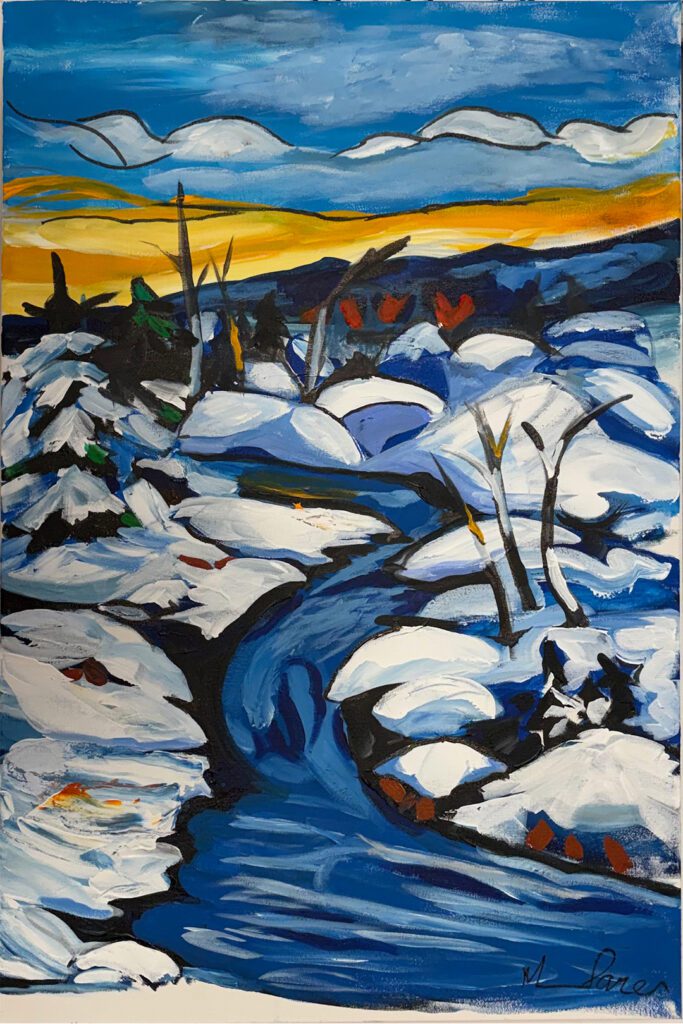
Original landscape paintings provide a one-off presence, documented provenance, and longer-term collection value. Commissioning usually begins with a consultation and a small color study or sketch for approval, followed by a production phase that can take four to twelve weeks depending on scale and medium. Monique Paré accepts artist-direct commissions for acrylic and oil landscape paintings and can scope series projects for corporate clients with provenance and office-ready packaging. See an example: Laurentian Winter — Original Acrylic Landscape by Monique Paré.
Once you choose a medium, plan size, placement, and protection so pieces perform in their physical context. Proper finishing and mounting ensure the work holds up visually and physically over time.
Sizing, placement and framing that works in offices
Scale changes how a piece anchors a room. Aim for artwork roughly 60 to 75 percent of seating width when hanging above sofas. For example, an 84-inch sofa pairs well with a painting about 50 to 60 inches wide. Always mock up sizes with painter’s tape to confirm scale and sightlines before ordering.
Choose frame profiles and glazing for both style and durability in commercial settings. Slim black metal or natural wood frames hold up well, while ornate frames suit traditional interiors. Use museum glass or low-reflective glazing in high-glare areas and for originals to protect color and reduce UV exposure, and select standard glass or acrylic to manage costs in very high-traffic zones.
Hanging height and spacing shape how people view art as they move through a space. Position the visual center of artwork at about 57 to 60 inches from the finished floor and leave 6 to 9 inches between the top of furniture and the bottom of the frame when anchoring pieces. For multi-panel compositions, keep internal gaps consistent: 1 to 2 inches works for tight triptychs, while 2 to 4 inches suit larger grids so the ensemble reads as a single composition.
Give your facilities team a concise hanging checklist that starts with measuring and marking the centerline and mocking up with painter’s tape to confirm scale. Add steps to check wall anchors and weight ratings, use consistent spacing and leveling, and photograph the installation for records so on-site crews can complete installs consistently and quickly.
Budget, pricing models and procurement strategy
Set clear price bands so stakeholders understand trade-offs and expected outcomes. Posters and mass-market prints typically cost under $100, while museum-quality fine art prints and mid-range reproductions commonly fall in the $50 to $200 range for small to medium sizes. Canvas reproductions span roughly $180 to $2,500 depending on size and finishing, and originals range from a few hundred dollars to tens of thousands, with gallery commissions of about 30 to 50 percent affecting the final price.
Use simple square-inch math to forecast costs for originals by dividing the artist price by the artwork’s area to calculate price per square inch; mid-career pieces often fall into a $6 to $20 per square-inch band. For reproducible formats, standardize sizes and frames to negotiate bulk unit pricing and reduce per-item cost. Build three sample budgets to guide approvals: small, mid-range, and a lobby or experiential band that covers higher-end installations.
Follow a tight procurement flow that moves from brief and budget to mockups, approvals, purchase order, insurance, delivery, installation, and sign-off. Required documents include a certificate of authenticity for originals, condition reports for vintage works, transit insurance, packing lists, and artist invoices. Keep a short checklist—approved mockup, signed PO, insurance certificate, COA or condition report, and installation sign-off—to streamline approvals and lifecycle planning.
Where to buy landscape art: vetted online stores and when to commission originals
Match vendor strengths to your budget and quality goals so you buy with confidence. The right supplier depends on catalog breadth, customization options, framing services, and lead times. Below are reliable starting points organized by need.
- Art.comand Great Big Canvas offer broad catalogs and flexible framing options that suit mixed budgets. They work well when you need quick options and standard sizes across many sites.
- Society6 andPoster Storesupply affordable thematic prints ideal for quick styling or temporary rentals. Their catalogs favor trend-driven designs and fast turnaround.
- Museum Quality Art, FinerWorks, and Mpix focus on premium reproductions and museum-quality framing. Use them when color fidelity and archival materials matter.
Buy originals directly from artists or through reputable galleries when you want exclusivity, documented provenance, and the option to customize scale or palette. Commissioning is appropriate when you need a specific narrative, brand colorways, or unusual dimensions that reproductions cannot deliver; begin with a pilot original in one primary room before expanding. For older or limited editions, consult vetted Etsy shops, specialist dealers, and auction houses and always request condition reports and certificates of authenticity. For examples of artist-led work collections, see the Landscapes Archives, Monique Paré.
Watch for common red flags such as suspiciously low pricing for a claimed rarity, missing provenance or inconsistent signatures, and vague or poor condition descriptions. If several issues appear, engage a qualified appraiser before purchase. Buying through vetted dealers and requesting documentation reduces risk for corporate collections.
Corporate packages, installation and how Monique Paré helps
Start a program with a site survey and scaled mockups so stakeholders can evaluate sightlines, finishes, and overall fit. Include an optional sample wall to test choices before rolling them out across locations. Coordinate framing options, bulk discounts, certified installation, shipping, insurance, and certificates of authenticity to protect value and provenance. Browse the Landscape Archives, Monique Paré for examples of turnkey, artist-led collections.
Turnkey logistics mean an artist-led collection arrives crated and ready for certified on-site hanging, with documentation for your facilities team. Typical lead times are one to three weeks for prints and canvas reproductions and four to twelve weeks or more for commissioned originals depending on scale and complexity. Run a pilot installation to validate sightlines, lighting, and staff response before committing to a full rollout.
- Request a site survey and a scaled mockup for a target wall so stakeholders can assess scale and finishes. Use that mockup to finalize placement and framing choices.
- Run a single pilot wall with approved finishes and framing to test sightlines and staff response. Treat the pilot as a live test before committing to multiple locations.
- Approve final specifications, confirm bulk discount tiers, and schedule phased installations across sites. Provide documentation for facilities and a timeline for handling and maintenance.
Landscape art is both a visual and strategic investment, so match subject to identity, choose the format that fits your budget, and size works to common sightlines so they enhance circulation rather than compete with it.
Choose landscape art that strengthens your brand
Make the next step concrete: photograph the intended wall in natural light and measure its dimensions, then submit those photos and sizes to your chosen vendor or artist for a size-and-palette recommendation. A short mockup and a single pilot installation will turn a vague idea into a confident selection that enhances both space and brand.