
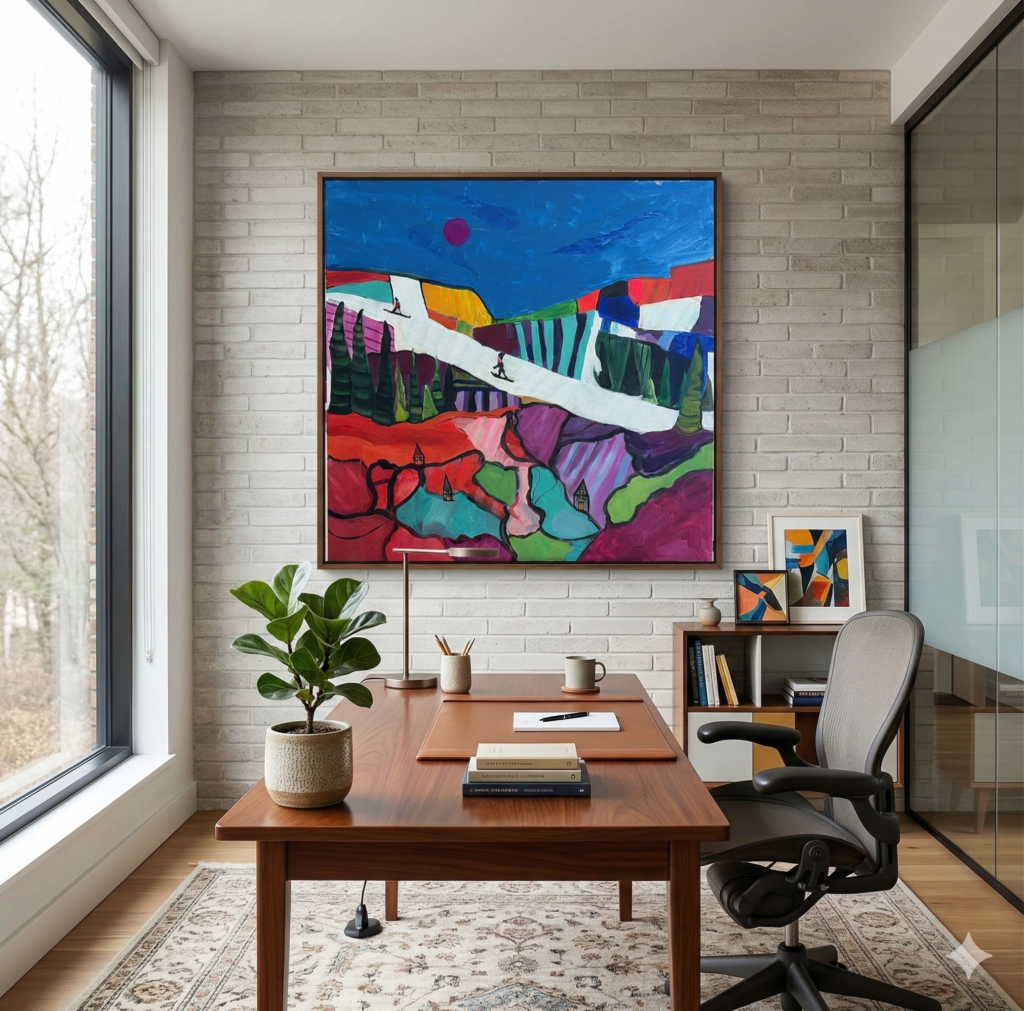
How to Style Mountain Landscape Wall Art in Your Home
Mountain landscape wall art can transform a room more than a new sofa. It adds depth and distance while giving the eye a calming focal point above a bed or over a couch. Horizon lines, scale and color temperature change how the space feels: cool, desaturated vistas push a wall back, while warm, saturated peaks bring the view forward. Whether you want a bold anchor or a quiet backdrop will shape your choices for size, framing and textiles.
Not every wall needs a sweeping panorama; sometimes a subtle accent makes more sense. Large horizontal mountain landscape pieces or canvases anchor sofas, medium triptychs or framed paintings work well over dining tables, and a single vertical print suits narrow hallways. Below are practical rules for scale, placement and materials so you can choose between acrylic clarity, metal durability or the textured warmth of canvas and put mountain scenery to work in your home.
Quick summary
- Scale and placement. Aim for artwork around two thirds to three quarters of the sofa width and hang the bottom edge 6 to 10 inches above the furniture. Use tall, vertical pieces in narrow halls to emphasize height.
- Choose the substrate. Canvas reads warm and textured, metal offers clean contrast and durability, and acrylic delivers saturated, museum-like color. Pick based on finish and how the piece should read from seating.
- Match palette to light. Cool, desaturated vistas push walls back in bright rooms while warm, saturated peaks advance. Coordinate the artwork’s tones with textiles and finishes so the space feels cohesive.
- Practical installation. Cut paper templates, check sightlines at seating height and mark hanging points before you drill. Use secure hardware for heavy panels and metal prints to avoid surprises.
- Commission or buy. Measure the wall, gather three preferred images and compare vendors; commission an original if you want tailored scale, palette and provenance. Originals typically include a certificate of authenticity and insured shipping from reputable sellers.
Why mountain landscape wall art works in your home
Decide if the artwork should anchor the room or remain a quiet backdrop, and choose scale and contrast to match that role.
How to choose the right material: canvas, metal, acrylic or framed
The substrate shapes how mountain landscape wall art reads and how it performs over time. Consider color saturation, detail, weight, durability and price so the finished piece supports your design goals and the room’s conditions. Below are practical differences to help you match material to mood and location.
- Canvas has a warm, textured surface and softer detail. It’s lightweight and less durable without varnish, so choose canvas for painterly work and keep it out of prolonged direct sun.
- Metal prints show vivid color and strong contrast with medium to high detail. They are lightweight to medium in weight and very durable when produced via dye-sublimation, which makes them suitable for high-traffic areas.
- Acrylic face-mount delivers the most saturated color and the finest detail with a glossy, museum-like depth. It is heavier and more expensive but holds up well when mounted on a rigid backing, so it’s ideal for dramatic photography and bright rooms.
- Framed giclée prints on archival paper provide high detail and stable color behind UV glass. They offer a classic presentation and good longevity when framed and glazed, and they sit in a mid-price range.
How materials handle light changes perceived color and detail. Acrylic magnifies contrast and smooth gradients, making ridgelines and subtle tones pop, while metal can add a slightly cool reflection and canvas lends visible weave that softens micro-detail. Longevity favors acrylic and quality metal labs, and untreated canvas benefits from varnish or limited sun exposure. For a deeper comparison of finishes see canvas vs metal vs acrylic.
Typical price tiers by size vary by material. Canvas often ranges from about $50 to $150 for small pieces, $150 to $400 for medium works and $300 to $900 for large formats. Metal and acrylic skew higher—metal commonly sits between $80 and $1,000 depending on size, while acrylic can range from $150 to $2,000 for larger, premium panels; framed giclée prints typically fall between $100 and $1,500 based on size and framing.
Consider investing in acrylic, archival prints or originals for large focal pieces, commissioned work or bright rooms where color fidelity and longevity matter most. Originals also provide provenance and a unique presence that prints cannot match. If budget is a constraint, mid-range labs and canvas options let you test compositions before committing to a major piece. A useful primer on photo print quality can help you evaluate labs and materials when comparing vendors.
Sizing and placement: live-in rules for sofas, beds and hallways
For sofas, use proportion so the artwork feels intentionally related to the furniture. Aim for a piece about two thirds to three quarters of the sofa width and hang the bottom edge 6 to 10 inches above the sofa back. Before committing, cut kraft-paper templates and tape them to the wall to test scale and sightlines from different seating positions. For a room-specific approach, see this living room wall art size guide for practical examples.
Above beds, scale the artwork to the headboard and the room’s mood. Center a single piece at roughly two thirds of the bed width and place the visual centerline around 57 to 60 inches from the floor so sightlines stay comfortable whether sitting up or standing across the room. Smaller bedrooms often benefit from a pair or trio of narrow works that together meet the two-thirds guideline without overwhelming the space.
Narrow hallways and stair runs respond best to vertical compositions or stacked portraits that emphasize height and movement. For multi-panel arrangements leave 2 to 3 inches between panels so the set reads as one cohesive work; for a relaxed gallery grouping space pieces 6 to 12 inches apart. Choose durable materials like metal or acrylic for busy corridors, and favor textured canvas for bedroom vignettes where a painted feel matters.
Styling and color palettes that make mountain scenes sing
Let the room’s architecture and finishes guide your choice because the same mountain landscape will read differently in a vaulted living room than in a compact bedroom. Use the artwork to set the palette for rugs, cushions and smaller accents so the scene feels integrated. Pull two or three colors from the piece to steer textiles and accessories and avoid tacking on unrelated tones. For more targeted inspiration, see Vibrant Mountain Painting Ideas for Your Living Room.
- Misty peaks: soft blues and slate grays suit modern-minimal interiors. Pair with streamlined furniture in walnut or black and linen or velvet textiles in muted blue and charcoal for a calm, measured look.
- Earthy trails: deep greens, browns and ochres fit rustic or lodge-inspired rooms. Combine leather seating, woven rugs and matte brass or black accents to echo trail-side textures.
- Snowy summit: whites and pale blues work well in airy, minimalist spaces. Keep furniture light in tone and use wool or cotton throws to amplify a fresh, breathable feel.
Frame choice helps set the mood: thin black or walnut frames read contemporary, wide reclaimed wood amplifies rustic character, and a float frame preserves an original without overpowering it. Add directional lighting, such as a narrow-beam LED picture light or an angled track fixture, to bring out depth, and choose anti-glare glazing on framed photos to reduce reflections. When mixing media, keep the color story consistent; pair one large canvas or acrylic with smaller prints or metal pieces, spacing artworks 2 to 4 inches for a tight grouping or 6 to 12 inches for a relaxed arrangement.
Where to buy: 8 recommended vendors and our exclusive picks
Below are reliable sellers organized by price and quality, followed by options for originals and commissions so you can match scale, material and style to your space. Use these suggestions as a starting point and confirm image resolution, framing options and return policies before you buy.
- iCanvas sells wide-format canvas prints that fill a wall quickly, typically priced between $50 and $300. Their selection suits large, affordable statement pieces when you want a fast update.
- Etsy features handmade options, tapestries and unique prints from independent sellers, with prices typically from $20 to $250. Read seller reviews and return policies carefully since quality can vary.
- Great Big Canvas runs frequent sales on large canvases and posters, making it useful for budget-friendly statement pieces in the $100 to $400 range. Check framing choices and shipping for oversized items.
For sharper color and longer-lasting results, consider these mid-range labs and premium sellers that offer higher-quality printing and framing options. They often handle custom sizes and provide better customer support for fit and finish.
- Darren White Photography delivers photographic clarity and fast shipping, with typical prices from $150 to $600. Confirm print materials and mounting options to match your room’s lighting conditions.
- ElephantStock offers well-reviewed canvas options and a reliable satisfaction window, usually priced between $80 and $350. Their customer service can help with size and material decisions for standard rooms.
- Big Wall Decor specializes in large-format panoramic prints and murals, commonly in the $200 to $800 range. They handle custom sizes but verify image resolution requirements before ordering.
- Mountain Canvas curates nature collections focused on peaks and vistas, typically priced from $100 to $500. Review return and shipping policies, especially for large pieces.
- Saatchi Art connects buyers with originals and limited-edition prints from vetted galleries and artists, with prices ranging from about $100 to several thousand; useful for collectors seeking unique mountain landscapes.
If you want a one-of-a-kind focal point, originals offer presence and provenance. Monique Paré sells original acrylic and oil mountain landscape paintings and accepts commissions; the process includes a short consultation, an approval sketch and delivery of a signed original with a certificate of authenticity. Originals suit collectors, corporate spaces seeking a unique statement or anyone wanting a personal memorial through a custom commission.
Installation, care and final tips to hang with confidence
Start by cutting paper templates to the exact frame or panel size and tape them to the wall at the planned height. Step back to check sightlines from seating and circulation paths, mark centerlines and hanging points on the paper, and then install hardware. Apartment Therapy outlines the three measurements you need to know when hanging artwork. Use D-rings and braided wire on stretched canvas, French cleats for large acrylic or metal panels, and heavy-duty anchors or toggles for drywall. For very heavy pieces fasten into two studs when possible and get a helper when lifting to reduce the risk of accidents.
Cleaning and environmental care depend on substrate and finish. Dust canvases with a dry microfiber cloth and avoid pressing into paint texture; clean acrylic faces with a mild soap solution and a soft lint-free cloth, then rinse and dry thoroughly. Never use ammonia-based cleaners on metal prints, and keep originals away from direct sunlight, radiators and humid bathrooms to reduce fading and warping. Aim for stable humidity around 40 to 55 percent and consider UV-filtering varnish or glazing for long-term protection.
Before purchasing, confirm the seller’s return window, print lab warranty and whether originals ship with insurance and a certificate of authenticity. Request mockups or room photos from the seller, or photograph your own wall and ask for a digital mockup to confirm scale. For prints, verify color profiling and framing options, and read reviews to understand shipping and customer service experiences.
Finish with a view: make mountain landscape wall art work for you
Follow the scale and placement rules for sofas, beds and hallways so a properly sized piece anchors the space and keeps sightlines calm. Measure the wall, note the natural light and collect three mountain landscape wall art images that capture the palette and mood you prefer, then compare how each option sits above your furniture. For a singular, permanent statement commission an original; prints are an easy way to experiment and refresh a room.